
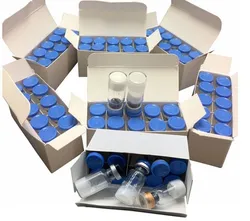

Tesamorelin & CJC-1295 (Mod GRF 1-29) & Ipamorelin Blend (12mg): A Triple‑Pathway Research Tool for Growth Hormone & Metabolic Studies
If your research explores the hypothalamic-pituitary-somatotropic axis, the dynamics of growth hormone (GH) secretion, or the metabolic effects of GH and IGF‑1 elevation, the Tesamorelin & CJC-1295 (Mod GRF 1-29) & Ipamorelin Blend (12mg) offers a sophisticated, triple‑pathway experimental platform. This 12 mg formulation combines three distinct GH secretagogues—Tesamorelin, a clinically validated GHRH analogue; CJC-1295 (Mod GRF 1-29), a stabilised GHRH fragment; and Ipamorelin, a selective ghrelin receptor agonist—each acting through complementary mechanisms to modulate the GH axis.
Tesamorelin provides the primary stimulus to initiate GH synthesis by activating the classical GHRH receptor pathway. CJC-1295 reinforces this signal with enhanced stability and pulsatile kinetics. Ipamorelin, meanwhile, engages the ghrelin/GHS‑R1a receptor system through a distinct mechanism, amplifying GH release without elevating cortisol, ACTH, or prolactin. By simultaneously targeting two major regulatory pathways that converge at the pituitary, this blend allows researchers to model the synergistic interplay that governs GH pulsatility, providing deeper insight into the circuits that regulate endocrine signalling, metabolic homeostasis, and tissue repair.
At Chinese Grey Peptides, we supply high‑purity Tesamorelin & CJC-1295 (Mod GRF 1-29) & Ipamorelin Blend (12mg) to research institutions and wholesale buyers across the United Kingdom, France, Germany, Spain, Sweden, Italy, and the USA. Every batch is lyophilised, HPLC‑verified to ≥98% purity, and accompanied by a Certificate of Analysis (COA), ensuring your investigations into GH regulation, IGF‑1 signalling, and metabolic research begin with uncompromising quality.
What Is the Tesamorelin & CJC-1295 (Mod GRF 1-29) & Ipamorelin Blend (12mg) and How Does It Work?
To fully appreciate the research potential of the Tesamorelin & CJC-1295 (Mod GRF 1-29) & Ipamorelin Blend (12mg), it is essential to understand the distinct yet convergent mechanisms of its three components.
Tesamorelin: The Clinically Validated GHRH Analogue
Tesamorelin is a synthetic 44‑amino‑acid peptide analogue of growth hormone‑releasing hormone (GHRH), also known as growth hormone‑releasing factor (GRF). It comprises the 44‑amino‑acid sequence of human GRF with an N‑terminal trans‑3‑hexenoic acid group that enhances stability. In vitro, tesamorelin binds and stimulates human GRF receptors with similar potency as the endogenous GRF.
As a GHRH analogue, tesamorelin acts on pituitary somatotroph cells to stimulate the synthesis and pulsatile release of endogenous growth hormone, which is both anabolic and lipolytic. Tesamorelin is the first and, so far, only treatment indicated for the reduction of excess abdominal fat in patients with HIV‑associated lipodystrophy.
CJC-1295 (Mod GRF 1-29): The Stabilised GHRH Fragment
CJC-1295 without DAC, commonly referred to as Modified GRF(1-29) or Mod GRF 1-29, is a synthetic 29‑amino‑acid peptide analogue of GHRH. It represents the active peptide component of the CJC‑1295 platform without the Drug Affinity Complex (DAC) moiety that enables albumin binding.
Without the DAC, CJC-1295 has a plasma half‑life of approximately 30 minutes, fundamentally changing its pharmacokinetic and pharmacodynamic profile. It produces discrete, physiological GH pulses similar to natural GHRH signalling, with enhanced stability due to DPP‑IV‑resistant modifications. Research has shown that CJC‑1295 produces a 4‑fold increase in GH area under the curve over a 2‑hour period compared with hGRF(1‑29).
Ipamorelin: The Selective Ghrelin Receptor Agonist
Ipamorelin is a synthetic pentapeptide and a selective agonist of the ghrelin receptor (GHS‑R1a). It was described as the first GHRP‑receptor agonist with a selectivity for GH release similar to that displayed by GHRH.
In vitro, ipamorelin releases GH from primary rat pituitary cells with a potency and efficacy similar to GHRP‑6. Unlike other GH secretagogues, ipamorelin’s action is more selective, potentially reducing the likelihood of unwanted hormonal fluctuations such as elevations in cortisol and prolactin.
Mechanism of Synergy: Triple‑Pathway Activation
The scientific rationale for combining tesamorelin, CJC‑1295, and ipamorelin lies in their convergent yet distinct mechanisms:
-
Tesamorelin provides the primary stimulus to initiate GH synthesis and release by activating the classical GHRH receptor pathway.
-
CJC‑1295 (Mod GRF 1‑29) reinforces this signal with enhanced stability, producing physiological GH pulses that mimic natural GHRH signalling.
-
Ipamorelin engages the ghrelin/secretagogue receptor system through a distinct mechanism, amplifying GH release without elevating cortisol, ACTH, or prolactin.
This triple‑pathway activation has been shown to produce synergistic GH release, with the combination of a GHRH analogue and a ghrelin receptor agonist producing a stronger, more sustained increase in natural GH output than either peptide alone. Research suggests that the blend may offer a multifaceted approach to stimulating GH release, leveraging the distinct mechanisms of each peptide to support GH stimulation’s overall efficacy and stability.
Key Research Applications for the Tesamorelin & CJC-1295 (Mod GRF 1-29) & Ipamorelin Blend (12mg)
The Tesamorelin & CJC-1295 (Mod GRF 1-29) & Ipamorelin Blend (12mg) is a versatile tool with applications spanning several domains of endocrinological and metabolic research.
1. Growth Hormone Axis & Pituitary Function Studies
This blend provides a powerful model for investigating the hypothalamic‑pituitary‑somatotropic axis. Researchers can use it to study:
-
The synergistic effects of GHRH and ghrelin pathway co‑activation on GH synthesis, storage, and pulsatile release.
-
The distinct contributions of GHRH‑mediated and ghrelin‑mediated signalling to overall GH secretion.
-
The dynamics of GH pulse amplitude and frequency in response to triple‑pathway stimulation.
-
The comparative pharmacology of different GHRH analogues (tesamorelin vs. CJC‑1295) in combination with a ghrelin receptor agonist.
2. Metabolic & Body Composition Research
By stimulating endogenous GH release through three complementary pathways, this blend provides a model for studying the downstream metabolic effects of GH and IGF‑1 elevation. Research applications include:
-
Visceral Fat Reduction: Tesamorelin has the strongest evidence for visceral fat reduction, supported by FDA approval for HIV‑associated lipodystrophy. CJC‑1295 and ipamorelin can raise growth hormone levels, which has downstream metabolic effects.
-
Lipid Metabolism: Exploring the role of GH in lipolysis and fat metabolism.
-
Lean Body Mass: Growth hormone‑stimulating peptides work through the body’s own GH axis to drive protein synthesis and support structural repair.
3. Muscle Recovery & Anabolic Signalling Research
GH and IGF‑1 are central to anabolic signalling cascades involved in protein synthesis and cellular growth. Research applications include:
-
Muscle Protein Synthesis: Increased GH release may influence muscle protein synthesis, promoting muscle growth and maintenance.
-
Cellular Repair: The blend supports cellular regeneration by stimulating growth hormone production.
-
Satellite Cell Activation: Peptides like ipamorelin, CJC‑1295, and tesamorelin activate IGF‑1 signalling and satellite cell repair.
4. Neuroendocrine & Receptor Pharmacology Research
The blend offers a multifaceted research modality for probing endogenous growth hormone axis mechanics. Researchers can use it to:
-
Investigate the complex interplay between the GHRH and ghrelin systems.
-
Study the downstream signalling pathways activated by GHRH and ghrelin receptor co‑stimulation.
-
Characterise dual‑GPCR signalling and second‑messenger outputs in the context of GH regulation.
-
Explore receptor bias and systems‑level integration within the organism.
Chemical & Physical Specifications for Tesamorelin & CJC-1295 (Mod GRF 1-29) & Ipamorelin Blend (12mg)
Accurate characterisation of the Tesamorelin & CJC-1295 (Mod GRF 1-29) & Ipamorelin Blend (12mg) is essential for reproducible experimental design.
| Parameter | Specification |
|---|---|
| Common Names | Tesamorelin + CJC‑1295 (Mod GRF 1‑29) + Ipamorelin Blend, “Tesa/CJC/Ipa” Stack |
| Components | Tesamorelin, CJC‑1295 (Mod GRF 1‑29) without DAC, Ipamorelin |
| CJC‑1295 Type | Without DAC (Drug Affinity Complex) — half‑life ~30 minutes |
| Tesamorelin Sequence | 44‑amino‑acid GHRH analogue |
| CJC‑1295 Sequence | 29‑amino‑acid GHRH analogue (tetrasubstituted GRF 1‑29) |
| Ipamorelin Sequence | Pentapeptide (Aib‑His‑D‑2‑Nal‑D‑Phe‑Lys‑NH₂) |
| Tesamorelin Molecular Weight | ~5,135.78 g/mol |
| CJC‑1295 Molecular Weight | ~3,367.97 g/mol |
| Ipamorelin Molecular Weight | ~711.8 g/mol |
| Tesamorelin CAS Number | 218949‑48‑5 |
| CJC‑1295 CAS Number | 863288‑34‑0 |
| Ipamorelin CAS Number | 170851‑70‑4 |
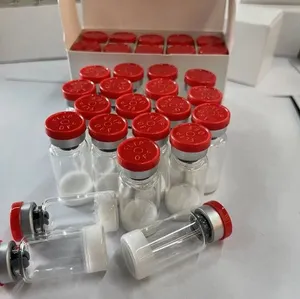
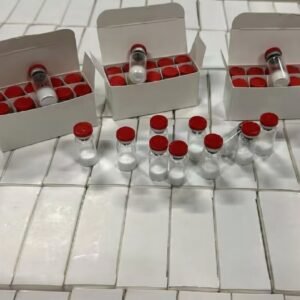
| Total Mass | 12 mg (lyophilised blend) |
| Purity (Each Component) | ≥98% (HPLC verified) |
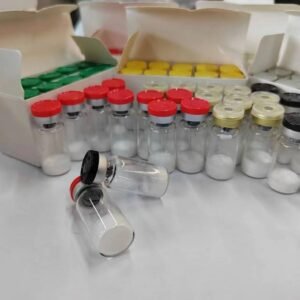
| Appearance | White to off‑white lyophilised powder |
| Solubility | Soluble in sterile water and sterile PBS (pH 5‑7) |
| Storage (Lyophilised) | –20°C, sealed, protected from light; stable for up to 2 years |
| Storage (Reconstituted) | 2‑8°C for short‑term use; single‑use aliquots at –20°C for up to 3 months |
Note: The 12 mg mass represents the total peptide weight of the blend. The exact ratio of tesamorelin to CJC‑1295 to ipamorelin is determined by the formulation (contact for details). The blend is supplied in a single lyophilised vial. CJC‑1295 in this blend does not contain the Drug Affinity Complex (DAC) moiety, preserving physiological pulsatility.
Reconstitution & Handling Protocol for the Tesamorelin & CJC-1295 (Mod GRF 1-29) & Ipamorelin Blend (12mg)
Proper reconstitution of the Tesamorelin & CJC-1295 (Mod GRF 1-29) & Ipamorelin Blend (12mg) is critical for maintaining the structural integrity and biological activity of all three peptides.
Step 1 – Preparation
-
Bring the sealed blend vial and your chosen diluent (sterile bacteriostatic water or sterile PBS, pH 5‑7) to room temperature. Condensation can degrade the lyophilised powder.
-
Clean your work surface with 70% ethanol and lay out sterile syringes, alcohol wipes and a clean work mat.
Step 2 – Vial Sanitisation
-
Wipe the rubber stopper of the blend vial with a fresh 70% ethanol wipe. Allow the alcohol to evaporate completely before piercing.
Step 3 – Reconstitution
-
Draw your desired volume of diluent into a sterile syringe. A common starting concentration for research applications is 12 mg per 1.2 mL of diluent, yielding a 10 mg/mL total peptide concentration.
-
Insert the needle and slowly inject the diluent against the inner glass wall. Do not spray directly onto the lyophilised powder.
-
Gently swirl the vial until the solution is clear and fully dissolved. Do not shake vigorously, as shaking can cause denaturation.
Step 4 – Aliquoting & Storage
-
Immediately after dissolution, aliquot the reconstituted peptide blend into single‑use sterile vials.
-
Store aliquots at –20°C. Avoid repeated freeze‑thaw cycles, as peptides are susceptible to degradation.
-
Once thawed, store at 2‑8°C and use within 14‑21 days. Do not freeze reconstituted solution.
Concentration Reference Table for Tesamorelin & CJC-1295 (Mod GRF 1-29) & Ipamorelin Blend (12mg)
| Vial Mass | Diluent Volume | Total Final Concentration |
|---|---|---|
| 12 mg | 1.2 mL | 10 mg/mL |
| 12 mg | 2.4 mL | 5 mg/mL |
| 12 mg | 0.6 mL | 20 mg/mL |
Adjust diluent volume based on your experimental requirements. The exact concentration of each individual peptide within the blend is determined by the formulation’s component ratio.
Storage & Stability Guidelines for Tesamorelin & CJC-1295 (Mod GRF 1-29) & Ipamorelin Blend (12mg)
| Storage Condition | Shelf Life | Notes |
|---|---|---|
| Lyophilised at –20°C, unopened | 2 years | Use desiccant, protect from light |
| Lyophilised at 2‑8°C, unopened | 6‑12 months | –20°C storage is strongly preferred for long‑term stability |
| Reconstituted at 2‑8°C | 14‑21 days | Must be sterile; use aseptic technique for each withdrawal |
| Reconstituted aliquots at –20°C | Up to 3 months | Single freeze only; discard after thawing |
Why Choose Chinese Grey Peptides for the Tesamorelin & CJC-1295 (Mod GRF 1-29) & Ipamorelin Blend (12mg)?
As an authentic licensed peptide supplier based in the USA, we supply the Tesamorelin & CJC-1295 (Mod GRF 1-29) & Ipamorelin Blend (12mg) and a wide range of research‑grade compounds under rigorous quality assurance protocols, fully aligned with Google’s E‑E‑A‑T standards (Experience, Expertise, Authoritativeness, Trustworthiness).
-
Verified Purity: Independent HPLC analysis with purity guaranteed ≥98% for each component, every batch.
-
GMP‑Compliant Manufacturing: All peptides are synthesised under strict quality control conditions.
-
Full Traceability: Batch‑specific Certificates of Analysis (COA) are available for every order.
-
Wholesale Supply: We serve research institutions, laboratories, and wholesale buyers across the UK, EU, and USA with flexible volume pricing and reliable logistics.
-
USA‑Based Regulatory Compliance: All products are supplied strictly as research‑grade chemicals for laboratory use only (RUO). This peptide blend is intended strictly for laboratory research, analytical, or reference use, where permitted by local regulations. Not for human or veterinary use.
Researchers across the United States—including those at leading institutions—trust us for fast domestic delivery, transparent documentation and professional technical support.
FAQ: Tesamorelin & CJC-1295 (Mod GRF 1-29) & Ipamorelin Blend (12mg)
What is the Tesamorelin & CJC‑1295 & Ipamorelin Blend (12mg)?
It is a research‑grade formulation combining Tesamorelin (a clinically validated GHRH analogue), CJC‑1295 (Mod GRF 1‑29, a stabilised GHRH fragment without DAC), and Ipamorelin (a selective ghrelin receptor agonist). It is used as a triple‑pathway tool to study growth hormone stimulation, IGF‑1 signalling, and metabolic research.
How does each component work?
Tesamorelin binds to GHRH receptors on pituitary somatotrophs, stimulating GH synthesis and release. CJC‑1295 (Mod GRF 1‑29) reinforces this signal with enhanced stability, producing physiological GH pulses. Ipamorelin binds to the growth hormone secretagogue receptor (GHS‑R1a), amplifying GH release without elevating cortisol, ACTH, or prolactin.
What is the proposed synergy between these three peptides?
Tesamorelin provides the primary stimulus to initiate GH production. CJC‑1295 reinforces this signal with enhanced stability and pulsatile kinetics. Ipamorelin amplifies the response through the ghrelin receptor axis. Together, they produce synergistic GH release that is stronger than either peptide alone.
What is the difference between CJC‑1295 with DAC and without DAC?
CJC‑1295 without DAC (Mod GRF 1‑29) does not contain a drug affinity complex moiety and has a half‑life of approximately 30 minutes, producing discrete, physiological GH pulses. CJC‑1295 with DAC has a half‑life of approximately 8 days and produces continuous GH elevation.
What purity does your Tesamorelin & CJC‑1295 & Ipamorelin Blend (12mg) meet?
Each component is tested to ≥98% purity by HPLC. A Certificate of Analysis (COA) is supplied with every order.
How should I reconstitute this peptide blend?
Reconstitute with sterile bacteriostatic water or sterile PBS (pH 5‑7). Allow the vial to reach room temperature, then slowly inject the diluent against the inner glass wall and swirl gently. Do not shake. A typical starting concentration is 10 mg/mL.
How should I store reconstituted peptide blends?
Reconstituted blends should be stored at 2‑8°C and used within 14‑21 days. For longer storage, aliquot immediately into single‑use vials and store at –20°C for up to 3 months. Avoid repeated freeze‑thaw cycles.
Is this peptide blend legal to purchase in the USA for research?
Yes. This blend is a laboratory reagent sold for research use only (RUO). It is fully legal to purchase, possess, and use in the United States for legitimate in‑vitro or in‑vivo scientific research, provided it is not marketed with therapeutic claims. Note: These peptides are not approved for human use and are banned by the World Anti‑Doping Agency (WADA) for athletic use.
Does Chinese Grey Peptides ship internationally?
Yes. We ship across the UK, Europe (France, Germany, Spain, Sweden, Italy), and the USA from our US warehouse. Wholesale pricing is available for bulk orders.
Tesamorelin & CJC-1295 (Mod GRF 1-29) & Ipamorelin Blend (12mg)
Ships to USA, Canada, UK & Europe
Chinese Grey Peptides supports shipping to the USA, Canada, the United Kingdom, France, Germany, Spain, Sweden, Italy, and Europe where permitted.
Shipping support may include:
- Order processing updates
- Packaging support
- Tracking information where available
- Wholesale shipment planning
- Destination-based shipping review
- Customer support during transit
Shipping times may vary by order size, carrier, destination, customs process, product status, and local requirements.
Why Choose Chinese Grey Peptides?
Chinese Grey Peptides focuses on quality, support, and clear communication. We help buyers review product details before placing an order.
Customers choose us for:
- Professional peptide supplier support
- Small and wholesale order options
- Product documentation support
- HPLC testing information where available
- Mass Spectrum documentation where available
- International shipping support
- Responsive communication
- Clear order assistance before payment
We aim to make the buying process transparent, professional, and documentation-focused.
Tesamorelin & CJC-1295 (Mod GRF 1-29) & Ipamorelin Blend (12mg)
- Shop Page
- Bulk Orders Page
- Contact Page
- Shipping & Return Page
- Peptide Purity Page
- DailyMed EGRIFTA SV / WR labels
- PubChem Tesamorelin
- PubChem CJC-1295 and CJC-1295 without DAC
- PubChem Ipamorelin
- FDA peptide warning letter
- Google Product Structured Data
Tesamorelin & CJC-1295 (Mod GRF 1-29) & Ipamorelin Blend (12mg)
From its innovative design as a triple‑pathway GH secretagogue blend to its well‑documented role in modelling the synergistic interplay between the GHRH and ghrelin systems, the Tesamorelin & CJC-1295 (Mod GRF 1-29) & Ipamorelin Blend (12mg) provides a uniquely versatile platform for advanced endocrinological and metabolic research.
Its ability to stimulate endogenous GH release through three distinct yet convergent pathways—tesamorelin providing the primary stimulus, CJC‑1295 reinforcing with pulsatile kinetics, and ipamorelin amplifying through the ghrelin receptor axis—supported by research demonstrating synergistic GH release and clinical validation of tesamorelin, makes it a valuable addition to any laboratory investigating the GH/IGF‑1 axis, metabolic regulation, or tissue repair. By choosing high‑purity, lab‑verified Tesamorelin & CJC-1295 (Mod GRF 1-29) & Ipamorelin Blend (12mg) from Chinese Grey Peptides, you ensure that your research is built on a foundation of quality, reproducibility, and scientific integrity.
Ready to advance your research with the Tesamorelin & CJC-1295 (Mod GRF 1-29) & Ipamorelin Blend (12mg)? Browse our product catalogue, request a wholesale quote, or contact our support team today to discuss your laboratory’s specific needs. Place your order now and receive GMP‑grade research peptides delivered directly to your facility in the USA, UK, or Europe.
Be the first to review “Tesamorelin & CJC-1295 (Mod GRF 1-29) & Ipamorelin Blend (12mg)”
Related products

Peptides
Peptides
Peptides
Reviews
There are no reviews yet.