
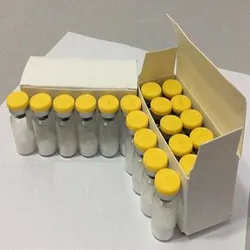
VIP (6mg) Research Peptide: A 28‑Amino‑Acid Neuropeptide for Neuroprotection, Inflammation & Gastrointestinal Studies
If your research investigates neuroimmune signalling, gastrointestinal homeostasis, or the molecular mechanisms underlying neuroprotection and inflammation, VIP (6mg) research peptide — also known as Vasoactive Intestinal Peptide — offers a precisely defined and extensively studied synthetic tool. VIP is a 28‑amino‑acid neuropeptide belonging to the glucagon/secretin superfamily, first isolated in 1970 and recognised for its potent vasodilatory effects.
It is widely distributed in both the central and peripheral nervous systems, as well as in immune cells, functioning as a neurotransmitter, vasodilator, and immunomodulator. VIP exerts its pleiotropic effects through binding to three G‑protein‑coupled receptors — VPAC1, VPAC2, and PAC1 — activating adenylate cyclase and increasing intracellular cAMP. This makes VIP (6mg) research peptide a valuable tool for laboratories investigating neuroprotection, immunomodulation, gastrointestinal function, and the broader molecular pathways underlying neuroimmune crosstalk.
At Chinese Grey Peptides, we supply high‑purity VIP (6mg) research peptide to research institutions and wholesale buyers across the United Kingdom, France, Germany, Spain, Sweden, Italy, and the USA. Every batch is lyophilised, HPLC‑verified to ≥99% purity, and accompanied by a Certificate of Analysis (COA), ensuring your investigations into neuroimmune signalling and tissue homeostasis begin with uncompromising quality.
What Is VIP (Vasoactive Intestinal Peptide) and How Does It Work?
To fully appreciate the research potential of VIP (6mg) research peptide, it is essential to understand its biochemical structure, its mechanism of action, and the pathways by which it exerts its pleiotropic effects.
The 28‑Amino‑Acid Neuropeptide
VIP (Vasoactive Intestinal Peptide) is a 28‑amino‑acid peptide hormone belonging to the glucagon/secretin superfamily. Its molecular formula is C₁₄₇H₂₃₇N₄₃O₄₃S, with a molecular weight of approximately 3,326.8 g/mol. It has a CAS number of 40077-57-4. The peptide is found naturally in both the central and peripheral nervous systems, as well as in immune cells.
Mechanism of Action: VPAC Receptor Signalling and Pleiotropic Effects
The biological activity of VIP (6mg) research peptide is mediated through its binding to three distinct G‑protein‑coupled receptors:
-
VPAC1, VPAC2, and PAC1 Receptor Binding: VIP binds with high affinity to VPAC1, VPAC2, and PAC1 receptors. VPAC1 is mainly expressed in the brain, liver, lungs, intestine, and immune cells; VPAC2 is expressed in the central nervous system, pancreas, heart, kidney, skeletal muscles, and gastrointestinal tract; and PAC1 is predominant in the brain and adrenal region.
-
cAMP/PKA Signalling Cascade: Upon receptor binding, VIP activates adenylate cyclase, increasing intracellular cAMP levels and triggering protein kinase A (PKA) pathways.
-
Neurotransmission and Neuromodulation: VIP functions as a neurotransmitter and neuromodulator, influencing synaptic plasticity, neuronal survival, and circadian rhythm regulation.
-
Immunomodulation: VIP inhibits NF‑κB inflammatory pathways in innate immune cells, promotes anti‑inflammatory Th2 responses, and reduces inflammatory Th1 differentiation.
-
Smooth Muscle Relaxation: VIP induces relaxation of gastrointestinal, vascular, and respiratory smooth muscle.
Research Note: A Clinically Relevant Neuropeptide
VIP has received FDA Orphan Drug designation for certain indications. It has been studied in the context of chronic inflammatory response syndrome (CIRS), pulmonary hypertension, Crohn’s disease, ulcerative colitis, and arthritis. In intestinal research, VIP has been shown to promote secretory differentiation and mitigate radiation‑induced intestinal injury. VIP antagonists have demonstrated potent anti‑leukemia activity by enhancing T‑cell activation.
Key Research Applications for VIP (6mg)
VIP (6mg) research peptide is a versatile tool with applications spanning several domains of biomedical research.
1. Neuroprotection & Neurological Research
VIP has demonstrated significant neuroprotective effects in multiple research models. Research applications include:
-
Neuronal Survival Studies: Investigating how VIP promotes neuronal survival through cAMP‑dependent and independent mechanisms.
-
Synaptic Plasticity: Studying how VIP enhances neurotransmitter release and facilitates the molecular changes required for long‑term potentiation.
-
Circadian Rhythm Research: Investigating VIP’s role in coordinating firing patterns of neurons in the suprachiasmatic nucleus (SCN).
-
Neuroinflammation: Exploring how VIP reduces neuroinflammation and protects neurons from oxidative stress.
2. Immunomodulation & Inflammation Research
VIP’s anti‑inflammatory properties make it a valuable tool for immunology research. Research has demonstrated:
-
Cytokine Modulation: VIP inhibits the synthesis of pro‑inflammatory cytokines and chemokines in innate immunity.
-
Th1/Th2 Balance: VIP inhibits inflammatory Th1‑type cell responses and promotes Th2‑type cell responses.
-
NF‑κB Inhibition: VIP inhibits NF‑κB inflammatory pathways in innate immune cells.
-
Regulatory T‑Cell Support: VIP promotes CD4⁺CD25⁺FoxP3⁺ regulatory T‑cell activity.
3. Gastrointestinal & Intestinal Research
VIP is prominently distributed along the enteric nervous system and plays a key role in intestinal homeostasis. Research applications include:
-
Intestinal Barrier Function: Investigating how VIP regulates intestinal epithelial barrier integrity and homeostasis.
-
Radiation‑Induced Intestinal Injury: Studying how VIP promotes secretory differentiation and mitigates radiation‑induced intestinal injury.
-
Necrotizing Enterocolitis (NEC): Investigating how exogenous VIP reduces NEC severity and decreases pro‑inflammatory cytokines IL‑6 and TNFα.
-
Inflammatory Bowel Disease: Exploring VIP’s potential to reduce gut inflammation in Crohn’s disease and ulcerative colitis.
4. Smooth Muscle & Vasodilatory Research
VIP’s potent vasodilatory and smooth muscle‑relaxing effects position it as a valuable tool for cardiovascular and respiratory research:
-
Vascular Relaxation: Investigating VIP’s role in vasodilation and blood flow regulation.
-
Pulmonary Hypertension: Studying how VIP improves blood flow in pulmonary hypertension models.
-
Respiratory Smooth Muscle: Exploring VIP’s ability to induce relaxation of respiratory smooth muscle.
5. Metabolic & Endocrine Research
VIP has been studied for its effects on metabolism and endocrine function:
-
Insulin Sensitivity: VIP enhances insulin sensitivity and glucose metabolism.
-
Lipid Metabolism: Preclinical data suggest VIP modulates glycogenolysis and lipid metabolism.
-
Incretin Effects: VIP exhibits incretin effects, modulating glucose homeostasis.
Chemical & Physical Specifications for VIP (6mg)
Accurate characterisation of VIP (6mg) research peptide is essential for reproducible experimental design.
| Parameter | Specification |
|---|---|
| Common Names | VIP, Vasoactive Intestinal Peptide, Vasoactive Intestinal Polypeptide |
| Amino Acid Count | 28 amino acids |
| Molecular Formula | C₁₄₇H₂₃₇N₄₃O₄₃S |
| Molecular Weight | ~3,326.8 g/mol |
| CAS Number | 40077‑57‑4 |
| Purity | ≥99% (HPLC verified) |
| Appearance | White to off‑white lyophilised powder |
| Solubility | Soluble in sterile water and sterile PBS (pH 5‑7) |
| Receptors | VPAC1, VPAC2, PAC1 |
| Storage (Lyophilised) | –20°C, sealed, desiccated, protected from light; stable for up to 24 months |
| Storage (Reconstituted) | 2‑8°C for short‑term use; single‑use aliquots at –20°C for up to 6 months |
Note: The 6 mg mass refers to the weight of the peptide in its lyophilised form. VIP is typically supplied as a TFA or acetate salt. The peptide is for research use only (RUO). Not for human use. VIP has received FDA Orphan Drug designation for certain indications.
Reconstitution & Handling Protocol for VIP (6mg)
Proper reconstitution of VIP (6mg) research peptide is critical for maintaining its structural integrity and biological activity. The peptide is soluble in sterile water and aqueous buffers.
Step 1 – Preparation
-
Bring the sealed VIP vial and your chosen diluent (sterile bacteriostatic water or sterile PBS, pH 5‑7) to room temperature. Condensation can degrade the lyophilised powder.
-
Clean your work surface with 70% ethanol and lay out sterile syringes, alcohol wipes and a clean work mat.
Step 2 – Vial Sanitisation
-
Wipe the rubber stopper of the VIP vial with a fresh 70% ethanol wipe. Allow the alcohol to evaporate completely before piercing.
-
Always centrifuge the vial before opening to bring the contents to the bottom.
Step 3 – Reconstitution
-
Draw your desired volume of diluent into a sterile syringe. A common starting concentration for research applications is 6 mg per 1‑2 mL of diluent, yielding a 3‑6 mg/mL stock solution.
-
Insert the needle and slowly inject the diluent against the inner glass wall. Do not spray directly onto the lyophilised powder.
-
Gently swirl the vial until the solution is clear and fully dissolved. Do not shake vigorously, as shaking can cause denaturation.
Step 4 – Aliquoting & Storage
-
Immediately after dissolution, aliquot the reconstituted VIP into single‑use sterile vials.
-
Store aliquots at –20°C. Avoid repeated freeze‑thaw cycles, as peptides are susceptible to degradation.
-
Once thawed, store at 2‑8°C and use within a short period.
Concentration Reference Table for VIP (6mg)
| Vial Mass | Diluent Volume | Final Concentration |
|---|---|---|
| 6 mg | 1.0 mL | 6 mg/mL |
| 6 mg | 2.0 mL | 3 mg/mL |
| 6 mg | 0.6 mL | 10 mg/mL |
Adjust diluent volume based on your experimental requirements. For cell culture applications, typical working concentrations may range from 0.1‑10 µM.
Storage & Stability Guidelines for VIP (6mg)
| Storage Condition | Shelf Life | Notes |
|---|---|---|
| Lyophilised at –20°C, unopened | Up to 24 months | Use desiccant, protect from light |
| Lyophilised at 2‑8°C, unopened | 6‑12 months | –20°C storage is strongly preferred for long‑term stability |
| Reconstituted at 2‑8°C | Short‑term use | Use within days to weeks |
| Reconstituted aliquots at –20°C | Up to 6 months | Single freeze only; discard after thawing |
Why Choose Chinese Grey Peptides for VIP (6mg)?
As an authentic licensed peptide supplier based in the USA, we supply VIP (6mg) research peptide and a wide range of research‑grade compounds under rigorous quality assurance protocols, fully aligned with Google’s E‑E‑A‑T standards (Experience, Expertise, Authoritativeness, Trustworthiness).
-
Verified Purity: Independent HPLC analysis with purity guaranteed ≥99% for every batch.
-
GMP‑Compliant Manufacturing: All peptides are synthesised under strict quality control conditions.
-
Full Traceability: Batch‑specific Certificates of Analysis (COA) are available for every order.
-
Wholesale Supply: We serve research institutions, laboratories, and wholesale buyers across the UK, EU, and USA with flexible volume pricing and reliable logistics.
-
USA‑Based Regulatory Compliance: All products are supplied strictly as research‑grade reagents for laboratory use only (RUO).
Researchers across the United States—including those at leading institutions—trust us for fast domestic delivery, transparent documentation and professional technical support.
FAQ: VIP (6mg) Research Peptide
What is VIP (6mg) research peptide?
VIP (Vasoactive Intestinal Peptide) is a 28‑amino‑acid neuropeptide belonging to the glucagon/secretin superfamily. It functions as a neurotransmitter, vasodilator, and immunomodulator, binding to VPAC1, VPAC2, and PAC1 receptors to activate cAMP/PKA signalling pathways.
What is the sequence and molecular weight of VIP?
VIP is a 28‑amino‑acid peptide with a molecular formula of C₁₄₇H₂₃₇N₄₃O₄₃S and a molecular weight of approximately 3,326.8 g/mol. The CAS number is 40077‑57‑4.
What are the primary research applications for VIP?
VIP is used in neuroprotection and neurological research (neuronal survival, synaptic plasticity, circadian rhythm), immunomodulation and inflammation research (cytokine modulation, Th1/Th2 balance, NF‑κB inhibition), gastrointestinal and intestinal research (intestinal barrier function, radiation‑induced injury, NEC), smooth muscle and vasodilatory research, and metabolic and endocrine research.
What is the mechanism of action of VIP?
VIP binds to VPAC1, VPAC2, and PAC1 receptors, activating adenylate cyclase and increasing intracellular cAMP. This triggers PKA signalling pathways, leading to neurotransmitter release, smooth muscle relaxation, and immunomodulatory effects.
What is the difference between VPAC1 and VPAC2 receptors?
VPAC1 is mainly expressed in the brain, liver, lungs, intestine, and immune cells, while VPAC2 is expressed in the central nervous system, pancreas, heart, kidney, skeletal muscles, and gastrointestinal tract. PAC1 is predominant in the brain and adrenal region.
What purity does your VIP (6mg) meet?
Our VIP is tested to ≥99% purity by HPLC. A Certificate of Analysis (COA) is supplied with every order.
How should I reconstitute VIP (6mg)?
Reconstitute with sterile bacteriostatic water or sterile PBS (pH 5‑7). Allow the vial to reach room temperature, then slowly inject the diluent against the inner glass wall and swirl gently. Do not shake. A typical starting concentration is 3‑6 mg/mL.
How should I store reconstituted VIP?
Reconstituted VIP should be stored at 2‑8°C for short‑term use. For longer storage, aliquot immediately into single‑use vials and store at –20°C for up to 6 months. Avoid repeated freeze‑thaw cycles.
Is VIP research peptide legal to purchase in the USA?
Yes. VIP is a laboratory reagent sold for research use only (RUO). It is fully legal to purchase, possess, and use in the United States for legitimate in‑vitro or in‑vivo scientific research, provided it is not marketed with therapeutic claims.
Does Chinese Grey Peptides ship internationally?
Yes. We ship across the UK, Europe (France, Germany, Spain, Sweden, Italy), and the USA from our US warehouse. Wholesale pricing is available for bulk orders.
- Shop Page
- Bulk Orders Page
- Contact Page
- Shipping & Return Page
- Peptide Purity Page
- PubMed VIP overview
- IUPHAR/BPS VIP ligand page
- IUPHAR Review on VIP/PACAP receptors
- FDA peptide warning letters
- Google Product Structured Data
- Rank Math WooCommerce Product Schema
From its discovery in 1970 as a potent vasodilator to its well‑characterised role as a pleiotropic neuropeptide bridging the nervous, endocrine, and immune systems, VIP (6mg) research peptide provides a precisely defined and extensively validated platform for advanced neuroimmune research. Its ability to activate VPAC1, VPAC2, and PAC1 receptors, modulate cAMP/PKA signalling, inhibit NF‑κB inflammatory pathways, and promote neuroprotection and intestinal homeostasis—supported by peer‑reviewed research published in PubMed, ScienceDirect, and other authoritative journals—makes it a valuable addition to any laboratory investigating neuroprotection, immunomodulation, gastrointestinal function, or the broader molecular pathways underlying neuroimmune crosstalk.
By choosing high‑purity, lab‑verified VIP (6mg) research peptide from Chinese Grey Peptides, you ensure that your research is built on a foundation of quality, reproducibility, and scientific integrity.
Ready to advance your research with VIP (6mg)? Browse our product catalogue, request a wholesale quote, or contact our support team today to discuss your laboratory’s specific needs. Place your order now and receive GMP‑grade VIP delivered directly to your facility in the USA, UK, or Europe.
Be the first to review “VIP (6mg)”
Related products
Peptides

Reviews
There are no reviews yet.