Vesugen (20mg) Research Peptide: A Tripeptide Bioregulator for Vascular & Cellular Studies
If your research explores vascular biology, tissue‑specific regulatory peptides, or the molecular mechanisms underlying cellular repair and aging, Vesugen (20mg) research peptide — also known as T‑38 or KED (Lys‑Glu‑Asp) — offers a precisely defined synthetic tripeptide with a growing body of scientific literature. Vesugen is one of a number of short regulatory peptides developed in Russia in the late 1990s and early 2000s. It is classified as a short peptide bioregulator within the broader family of regulatory oligopeptides.
Vesugen is hypothesised to influence vascular cell behaviour by promoting signalling pathways related to cellular repair and maintenance. Its sequence of three amino acids — lysine, glutamic acid, and aspartic acid — is thought to confer selective affinity toward vascular‑associated tissues. This makes Vesugen (20mg) research peptide a valuable tool for laboratories investigating vascular biology, cellular signalling, and the systems‑level coordination of tissue function.
At Chinese Grey Peptides, we supply high‑purity Vesugen (20mg) research peptide to research institutions and wholesale buyers across the United Kingdom, France, Germany, Spain, Sweden, Italy, and the USA. Every batch is lyophilised, HPLC‑verified to ≥99% purity, and accompanied by a Certificate of Analysis (COA), ensuring your investigations into vascular signalling and cellular repair begin with uncompromising quality.
What Is Vesugen and How Does It Work?
To fully appreciate the research potential of Vesugen (20mg) research peptide, it is essential to understand its biochemical identity and the mechanisms by which it is hypothesised to exert its effects.
The KED Tripeptide
Vesugen is a synthetic tripeptide consisting of three amino acids: lysine, glutamic acid, and aspartic acid — the sequence Lys‑Glu‑Asp (KED). Its molecular formula is C₁₅H₂₆N₄O₈, and its molecular weight is approximately 390.39 g/mol. It has a CAS number of 204271‑66‑9.
The development of Vesugen was inspired by studies of a natural peptide complex named “Ventfort®”, obtained from the blood vessels of young animals. Researchers identified the Vesugen tripeptide within this natural complex and considered it a key active component responsible for vascular regulatory activity. It is one of a number of small peptides developed in Russia which are purported to have anti‑aging effects.
Mechanism of Action: Vascular Signalling and Structural Modulation
The biological activity of Vesugen (20mg) research peptide is hypothesised to involve several intersecting mechanisms:
Vascular‑Associated Signalling
Vesugen is often discussed in relation to vascular systems, with research indicating that vascular tissues may serve as a primary interface through which broader systemic coordination unfolds. The peptide’s amino acid arrangement is theorised to confer selective affinity toward vascular‑associated tissues — a selectivity that may arise from contextual compatibility rather than exclusivity. Vesugen is hypothesised to influence how vascular tissues interpret and respond to environmental cues, modulating signalling coherence rather than imposing direct changes.
Cellular Proliferation and Protein Synthesis
Vesugen is claimed to stimulate proliferation and protein synthesis in fibroblast cells in the skin. Research indicates that peptides such as Vesugen might influence vascular cell behaviour by promoting signalling pathways related to cellular repair and maintenance. The tripeptide has also been shown to enhance the proliferation potential of immune cells.
Geroprotective and Anabolic Effects
In clinical research, Vesugen has demonstrated significant anabolic effects, improving the activity of the central nervous system and other vital organs, which slows the rate of aging by biological age indicators. Vesugen has demonstrated a more visible geroprophylactic effect than Pinealon. The inducing effect of peptides on the expression of differentiation factors was more pronounced in aged cultures, which can serve as a mechanism of their geroprotective effect.
Structural Memory and Systems‑Level Coordination
Vesugen has been theorised to participate in processes of structural memory — the capacity of tissues to retain informational imprints of prior states and to respond accordingly. Rather than rewriting structural organisation, the peptide seems to reinforce existing informational patterns, supporting coherence across cellular assemblies. Vesugen is thought to act as a contextual signal — one that gains relevance only when specific environmental or structural conditions are present.
Key Research Applications for Vesugen (20mg)
Vesugen (20mg) research peptide is a versatile tool with applications spanning several domains of biomedical research.
1. Vascular Biology and Endothelial Research
Vesugen supports vascular health by promoting the regeneration of endothelial cells, which line the inner walls of blood vessels. Research applications include:
-
Endothelial Cell Regeneration: Investigating how Vesugen stimulates the regeneration of endothelial cells to maintain healthy blood vessel walls.
-
Vascular Structural Integrity: Studying how Vesugen helps restore and maintain the structural integrity of blood vessels.
-
Circulatory Function: Exploring how Vesugen promotes better blood circulation by improving the function and health of blood vessels.
2. Cellular Repair and Fibroblast Research
Vesugen is claimed to stimulate proliferation and protein synthesis in fibroblast cells. Research applications include:
-
Fibroblast Proliferation: Investigating how Vesugen influences fibroblast cell proliferation and protein synthesis.
-
Cellular Repair Pathways: Studying how Vesugen promotes signalling pathways related to cellular repair and maintenance.
-
Tissue Regeneration: Exploring the peptide’s potential role in tissue regeneration and repair.
3. Geroprotection and Aging Research
Vesugen has demonstrated geroprotective effects in clinical research. Research applications include:
-
Biological Age Indicators: Investigating how Vesugen slows the rate of aging by biological age indicators.
-
Age‑Related Cellular Changes: Studying how Vesugen influences the expression of differentiation factors in aged cultures.
-
Systems‑Level Coordination: Exploring how Vesugen may participate in structural memory and tissue organisation over time.
4. Neurotropic and CNS Research
Vesugen promotes neurotropic effects in brain tissue. Research applications include:
-
Neuroprotection: Investigating the neuroprotective effects of Vesugen in models of oxidative stress and hypoxia.
-
Central Nervous System Activity: Studying how Vesugen improves the activity of the central nervous system.
-
Cognitive Function: Exploring the potential of Vesugen to support cognitive function in aging models.
5. Anti‑Inflammatory Research
Vesugen has anti‑inflammatory properties that help reduce inflammation in the vascular system. Research applications include:
-
Vascular Inflammation: Investigating how Vesugen reduces inflammation in the vascular system.
-
Atherosclerosis Models: Studying the peptide’s potential to lower the risk of conditions such as atherosclerosis and hypertension.
-
Cytokine Modulation: Exploring how Vesugen modulates inflammatory signalling pathways.
Chemical & Physical Specifications for Vesugen (20mg)
Accurate characterisation of Vesugen (20mg) research peptide is essential for reproducible experimental design.
| Parameter | Specification |
|---|---|
| Common Names | Vesugen, T‑38, KED tripeptide |
| Amino Acid Sequence | Lys‑Glu‑Asp (KED) |
| Molecular Formula | C₁₅H₂₆N₄O₈ |
| Molecular Weight | ~390.39 g/mol |
| CAS Number | 204271‑66‑9 |
| PubChem CID | 87571363 |
| Purity | ≥99% (HPLC verified) |
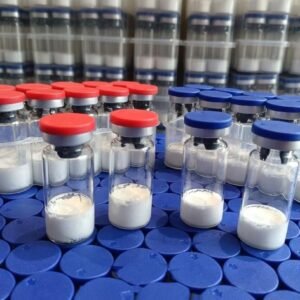
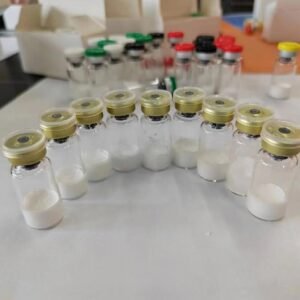
| Appearance | White to off‑white lyophilised powder |
| Solubility | Soluble in sterile water and sterile PBS (pH 5‑7) |
| Storage (Lyophilised) | –20°C, sealed, protected from light; stable for up to 24 months |
| Storage (Reconstituted) | 2‑8°C for short‑term use; single‑use aliquots at –20°C for long‑term storage |
Note: The 20 mg mass refers to the weight of the peptide in its lyophilised form. Vesugen is typically supplied as a TFA or acetate salt, which enhances aqueous solubility. The peptide is for research use only (RUO). Not for human use.
Reconstitution & Handling Protocol for Vesugen (20mg)
Proper reconstitution of Vesugen (20mg) research peptide is critical for maintaining its structural integrity and biological activity.
Step 1 – Preparation
-
Bring the sealed Vesugen vial and your chosen diluent (sterile bacteriostatic water or sterile PBS, pH 5‑7) to room temperature. Condensation can degrade the lyophilised powder.
-
Clean your work surface with 70% ethanol and lay out sterile syringes, alcohol wipes and a clean work mat.
Step 2 – Vial Sanitisation
-
Wipe the rubber stopper of the Vesugen vial with a fresh 70% ethanol wipe. Allow the alcohol to evaporate completely before piercing.
Step 3 – Reconstitution
-
Draw your desired volume of diluent into a sterile syringe. A common starting concentration for research applications is 20 mg per 2 mL of diluent, yielding a 10 mg/mL stock solution.
-
Insert the needle and slowly inject the diluent against the inner glass wall. Do not spray directly onto the lyophilised powder.
-
Gently swirl the vial until the solution is clear and fully dissolved. Do not shake vigorously, as shaking can cause denaturation.
Step 4 – Aliquoting & Storage
-
Immediately after dissolution, aliquot the reconstituted Vesugen into single‑use sterile vials.
-
Store aliquots at –20°C. Avoid repeated freeze‑thaw cycles, as peptides are susceptible to degradation.
-
Once thawed, store at 2‑8°C and use within a short period.
Concentration Reference Table for Vesugen (20mg)
| Vial Mass | Diluent Volume | Final Concentration |
|---|---|---|
| 20 mg | 2.0 mL | 10 mg/mL |
| 20 mg | 4.0 mL | 5 mg/mL |
| 20 mg | 1.0 mL | 20 mg/mL |
Adjust diluent volume based on your experimental requirements. For cell culture applications, typical working concentrations may range from 0.1‑10 µM.
Storage & Stability Guidelines for Vesugen (20mg)
| Storage Condition | Shelf Life | Notes |
|---|---|---|
| Lyophilised at –20°C, unopened | Up to 24 months | Use desiccant, protect from light |
| Lyophilised at 2‑8°C, unopened | 6‑12 months | –20°C storage is strongly preferred for long‑term stability |
| Reconstituted at 2‑8°C | Short‑term use | Use within days to weeks |
| Reconstituted aliquots at –20°C | Up to 3 months | Single freeze only; discard after thawing |
Why Choose Chinese Grey Peptides for Vesugen (20mg)?
As an authentic licensed peptide supplier based in the USA, we supply Vesugen (20mg) research peptide and a wide range of research‑grade compounds under rigorous quality assurance protocols, fully aligned with Google’s E‑E‑A‑T standards (Experience, Expertise, Authoritativeness, Trustworthiness).
-
Verified Purity: Independent HPLC analysis with purity guaranteed ≥99% for every batch.
-
GMP‑Compliant Manufacturing: All peptides are synthesised under strict quality control conditions.
-
Full Traceability: Batch‑specific Certificates of Analysis (COA) are available for every order.
-
Wholesale Supply: We serve research institutions, laboratories, and wholesale buyers across the UK, EU, and USA with flexible volume pricing and reliable logistics.
-
USA‑Based Regulatory Compliance: All products are supplied strictly as research‑grade chemicals for laboratory use only (RUO).
Researchers across the United States—including those at leading institutions—trust us for fast domestic delivery, transparent documentation and professional technical support.
FAQ: Vesugen (20mg) Research Peptide
What is Vesugen (20mg) research peptide?
Vesugen (T‑38) is a synthetic tripeptide with the sequence Lys‑Glu‑Asp (KED). It is a short regulatory peptide developed in Russia, hypothesised to influence vascular cell behaviour and promote cellular repair and maintenance.
What is the sequence and molecular weight of Vesugen?
The sequence is Lys‑Glu‑Asp (KED). Its molecular formula is C₁₅H₂₆N₄O₈, and its molecular weight is approximately 390.39 g/mol.
What are the primary research applications for Vesugen?
Vesugen is used in vascular biology and endothelial research, cellular repair and fibroblast studies, geroprotection and aging research, neurotropic and CNS research, and anti‑inflammatory research.
What is the mechanism of action of Vesugen?
Vesugen is hypothesised to influence vascular tissue interpretation and response to environmental cues, stimulate fibroblast proliferation and protein synthesis, and participate in processes of structural memory — reinforcing existing informational patterns across cellular assemblies.
What geroprotective effects has Vesugen demonstrated?
Clinical research has shown that Vesugen improves the activity of the central nervous system and other vital organs, slowing the rate of aging by biological age indicators. Vesugen has demonstrated a more visible geroprophylactic effect than Pinealon.
What purity does your Vesugen (20mg) meet?
Our Vesugen is tested to ≥99% purity by HPLC. A Certificate of Analysis (COA) is supplied with every order.
How should I reconstitute Vesugen (20mg)?
Reconstitute with sterile bacteriostatic water or sterile PBS (pH 5‑7). Allow the vial to reach room temperature, then slowly inject the diluent against the inner glass wall and swirl gently. Do not shake. A typical starting concentration is 10 mg/mL.
How should I store reconstituted Vesugen?
Reconstituted Vesugen should be stored at 2‑8°C for short‑term use. For longer storage, aliquot immediately into single‑use vials and store at –20°C for up to 3 months. Avoid repeated freeze‑thaw cycles.
Is Vesugen research peptide legal to purchase in the USA?
Yes. Vesugen is a laboratory reagent sold for research use only (RUO). It is fully legal to purchase, possess, and use in the United States for legitimate in‑vitro or in‑vivo scientific research, provided it is not marketed with therapeutic claims.
Does Chinese Grey Peptides ship internationally?
Yes. We ship across the UK, Europe (France, Germany, Spain, Sweden, Italy), and the USA from our US warehouse. Wholesale pricing is available for bulk orders.
Ships to USA, Canada, UK & Europe
Chinese Grey Peptides supports shipping to the USA, Canada, the United Kingdom, France, Germany, Spain, Sweden, Italy, and Europe where permitted.
Shipping support may include:
- Order processing updates
- Packaging support
- Tracking information where available
- Wholesale shipment planning
- Destination-based shipping review
- Customer support during transit
Shipping times may vary by order size, carrier, destination, customs process, product status, and local requirements.
Why Choose Chinese Grey Peptides?
Chinese Grey Peptides focuses on quality, support, and clear communication. We help buyers review product details before placing an order.
Customers choose us for:
- Professional peptide supplier support
- Small and wholesale order options
- Product documentation support
- HPLC testing information where available
- Mass Spectrum documentation where available
- International shipping support
- Responsive communication
- Clear order assistance before payment
We aim to make the buying process simple, transparent, and professional.
- Shop Page
- Bulk Orders Page
- Contact Page
- Shipping & Return Page
- Peptide Purity Page
- PubChem Lysyl-glutamyl-aspartic acid — useful for identity, KED, and Vesugen synonym reference.
- PubMed Vesugen / Lys-Glu-Asp research reference — useful for research-context background without making medical claims.
- FDA peptide warning letter — useful for compliance awareness around “research use only” wording and avoided human-use claims.
- Google Merchant Listing Structured Data — useful for product schema and ecommerce search visibility.
- Rank Math WooCommerce Product Schema
From its identification as a key vascular regulatory peptide within natural peptide complexes to its well‑characterised role in fibroblast proliferation, endothelial regeneration, and systems‑level structural modulation, Vesugen (20mg) research peptide provides a precisely defined and increasingly valuable platform for advanced vascular and cellular research. Its ability to influence vascular signalling, promote cellular repair, and demonstrate geroprotective effects—supported by peer‑reviewed research published in PubMed and other authoritative sources—makes it a valuable addition to any laboratory investigating vascular biology, cellular signalling, or the molecular mechanisms of aging. By choosing high‑purity, lab‑verified Vesugen (20mg) research peptide from Chinese Grey Peptides, you ensure that your research is built on a foundation of quality, reproducibility, and scientific integrity.
Ready to advance your research with Vesugen (20mg)? Browse our product catalogue, request a wholesale quote, or contact our support team today to discuss your laboratory’s specific needs. Place your order now and receive GMP‑grade Vesugen delivered directly to your facility in the USA, UK, or Europe.
Be the first to review “Vesugen (20mg)”
Related products
Peptides
Peptides
Peptides
Reviews
There are no reviews yet.