
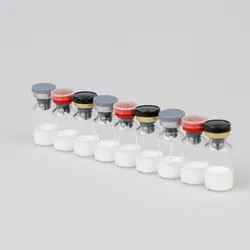

Triptorelin (2mg) Research Peptide: A Potent GnRH Agonist for Endocrine, Oncology & Fertility Studies
If your research investigates the hypothalamic-pituitary-gonadal (HPG) axis, hormone-sensitive oncology models, or the molecular mechanisms of fertility regulation, Triptorelin (2mg) research peptide offers a precisely defined and extensively validated synthetic tool. Triptorelin is a synthetic decapeptide agonist analog of the naturally occurring gonadotropin-releasing hormone (GnRH). Its major structural difference from endogenous GnRH is the substitution of D-tryptophan (D-Trp) at position 6 for L-glycine, which confers enhanced receptor binding affinity and resistance to enzymatic degradation.
As a result, triptorelin exhibits significantly greater potency than native GnRH, with animal studies demonstrating 13-fold higher releasing activity for luteinizing hormone (LH) and 21-fold higher releasing activity for follicle-stimulating hormone (FSH). This makes Triptorelin (2mg) research peptide a valuable tool for laboratories investigating reproductive endocrinology, hormone-dependent cancers, fertility preservation, and the broader neuroendocrine regulation of the HPG axis.
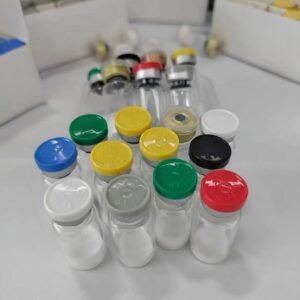
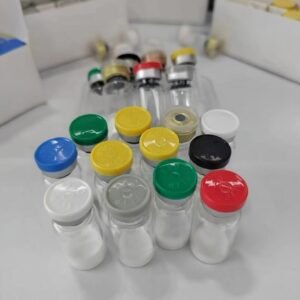
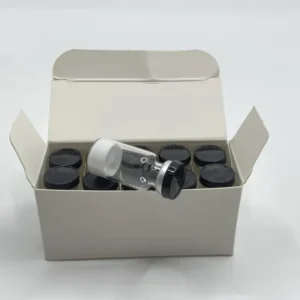
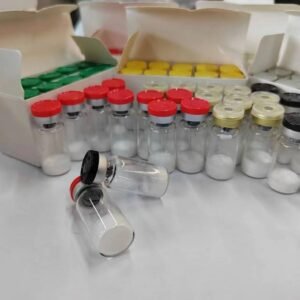
At Chinese Grey Peptides, we supply high‑purity Triptorelin (2mg) research peptide to research institutions and wholesale buyers across the United Kingdom, France, Germany, Spain, Sweden, Italy, and the USA. Every batch is lyophilised, HPLC‑verified to ≥98% purity, and accompanied by a Certificate of Analysis (COA), ensuring your investigations into endocrine regulation and receptor pharmacology begin with uncompromising quality.
What Is Triptorelin and How Does It Work?
To fully appreciate the research potential of Triptorelin (2mg) research peptide, it is essential to understand its biochemical structure, its dual‑phase mechanism of action, and its distinct pharmacological properties.
The Synthetic Decapeptide Agonist
Triptorelin is a synthetic decapeptide with the amino acid sequence: pGlu-His-Trp-Ser-Tyr-D-Trp-Leu-Arg-Pro-Gly-NH₂. Its molecular formula is C₆₄H₈₂N₁₈O₁₃, with a molecular weight of approximately 1311.5 g/mol. It has a CAS number of 57773-63-4. The substitution of D-tryptophan at position 6 is the key structural modification that differentiates triptorelin from native GnRH and contributes to its enhanced stability and potency.
Mechanism of Action: The Flare‑Up and Down‑Regulation Phases
The biological activity of Triptorelin (2mg) research peptide is mediated through its high‑affinity binding to the gonadotropin‑releasing hormone receptor (GnRH‑R), a 7‑transmembrane Gq/11‑coupled receptor found on anterior pituitary gonadotropes. Triptorelin exerts its effects through a well‑characterised biphasic mechanism:
-
Phase 1 – The “Flare‑Up” (Initial Stimulation): Upon initial exposure, triptorelin binds to and activates GnRH receptors on pituitary gonadotropes, triggering a transient surge in the secretion of luteinising hormone (LH) and follicle‑stimulating hormone (FSH). This acute stimulation leads to a temporary rise in gonadal sex steroid production—testosterone in males and oestrogen in females.
-
Phase 2 – Receptor Desensitisation and Down‑Regulation (Sustained Suppression): With continued, prolonged exposure, triptorelin induces desensitisation of pituitary GnRH receptors and down‑regulation of receptor gene expression. This results in a profound and sustained suppression of LH and FSH secretion. Consequently, gonadal steroid production declines dramatically, achieving a state of “chemical castration” within approximately 3‑4 weeks of continuous administration.
This biphasic pharmacology — initial stimulation followed by sustained suppression — makes triptorelin a uniquely versatile research tool for studying both the acute and chronic effects of GnRH receptor modulation.
Research Note: Potency and Clinical Relevance
Triptorelin has been shown to be a highly effective GnRH agonist, comparable to other widely used analogs like leuprolide and goserelin in its ability to suppress testosterone to castrate levels. It is used clinically to treat advanced prostate cancer, endometriosis, and precocious puberty. In healthy women during the follicular phase, serum LH levels reached a mean maximum of 49.0 IU/L, while FSH peaked at 20.3 IU/L at 5 hours after triptorelin administration. Triptorelin is associated with potent inhibition of testosterone and oestrogen synthesis but has not been convincingly linked to clinically apparent acute liver injury.
Key Research Applications for Triptorelin (2mg)
Triptorelin (2mg) research peptide is a versatile tool with applications spanning several domains of biomedical research.
1. HPG Axis & Reproductive Endocrinology Research
As a high‑affinity GnRH agonist, triptorelin is indispensable for basic and translational research into the neuroendocrine control of reproduction. Research applications include:
-
Receptor Pharmacology: Investigating the desensitisation and down‑regulation mechanisms of G‑protein‑coupled receptors (GPCRs), specifically the GnRH receptor.
-
Gonadotropin Dynamics: Studying the synthesis, storage, and pulsatile release of LH and FSH from pituitary gonadotropes.
-
Negative Feedback Loops: Exploring the effects of sex steroid suppression on the HPG axis.
-
Precocious Puberty Models: Investigating the pathophysiology of central precocious puberty (CPP) and the effects of GnRH agonist therapy.
2. Hormone‑Sensitive Cancer Research
By suppressing the HPG axis, triptorelin creates a low‑androgen or low‑oestrogen environment, making it a crucial tool for modelling hormone‑sensitive cancers:
-
Prostate Cancer Research: The androgen‑deprivation state induced by triptorelin serves as a standard comparator for studying the efficacy of novel anti‑androgens, androgen receptor antagonists, and agents targeting androgen biosynthesis. Triptorelin has been studied in human prostatic cell lines, showing stimulatory‑inhibitory effects on LNCaP cells depending upon dose and environment.
-
Breast and Ovarian Cancer Research: Triptorelin inhibits cell proliferation in cellular models of breast cancer and ovarian cancer. It is being studied in several clinical settings, mainly breast cancer.
3. Fertility Preservation & Assisted Reproduction Research
Triptorelin is being investigated for its potential to protect ovarian function during chemotherapy and to optimise controlled ovarian stimulation protocols:
-
Fertility Preservation: Triptorelin works by slowing down the ovaries and the hormones they make, allowing the ovaries to rest while patients receive chemotherapy. A Phase III trial is comparing triptorelin vs no triptorelin in preventing ovarian damage in adolescents and young adults with cancer receiving alkylating agent chemotherapy.
-
Ovarian Stimulation: Triptorelin is used to trigger the final stages of oocyte maturation and ovulation in controlled ovarian hyperstimulation (COS) protocols.
-
Embryo Development: Several triptorelin trials are in fertility care, especially ovarian stimulation and embryo development.
4. Endometriosis & Gynaecological Research
Triptorelin has been shown to be efficacious in the treatment of endometriosis and adenomyoma through reducing serum levels of FSH, LH, and 17β‑oestradiol. Research applications include:
-
Endometriosis Models: Investigating the regression of ectopic endometrial tissue in a hypoestrogenic state.
-
Uterine Fibroid Research: Studying the effects of GnRH agonist‑induced oestrogen suppression on fibroid growth.
5. Receptor Pharmacology & Signal Transduction
As a well‑characterised GnRH agonist, triptorelin serves as a reference standard for studying GnRH receptor pharmacology:
-
Receptor Binding Assays: Characterising the binding affinity and kinetics of GnRH receptor ligands.
-
Signal Transduction Studies: Dissecting the Gq/11 signalling pathways activated by GnRH receptor engagement.
-
Structure‑Activity Relationship (SAR) Studies: Investigating how modifications to the triptorelin sequence affect receptor binding and activity.
Chemical & Physical Specifications for Triptorelin (2mg)
Accurate characterisation of Triptorelin (2mg) research peptide is essential for reproducible experimental design.
| Parameter | Specification |
|---|---|
| Common Names | Triptorelin, Triptorelin Acetate, GnRH, LHRH agonist |
| Amino Acid Sequence | pGlu‑His‑Trp‑Ser‑Tyr‑D‑Trp‑Leu‑Arg‑Pro‑Gly‑NH₂ |
| Molecular Formula | C₆₄H₈₂N₁₈O₁₃ |
| Molecular Weight | ~1311.5 g/mol |
| CAS Number | 57773‑63‑4 |
| Purity | ≥98% (HPLC verified) |
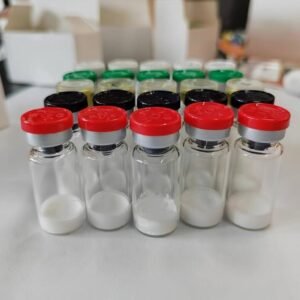
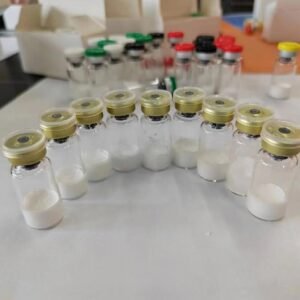
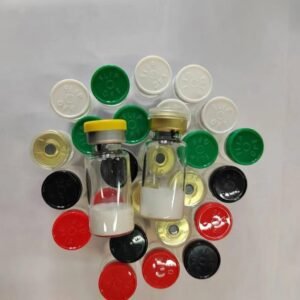
| Appearance | White to off‑white lyophilised powder |
| Solubility | Soluble in sterile water (up to 2 mg/mL) and sterile PBS (pH 5‑7) |
| Storage (Lyophilised) | –20°C, sealed, desiccated, protected from light; stable for up to 2 years |
| Storage (Reconstituted) | 2‑8°C for 2‑7 days; single‑use aliquots at –20°C for long‑term storage |
Note: The 2 mg mass refers to the weight of the peptide in its lyophilised form. Triptorelin is typically supplied as an acetate salt. The peptide is for research use only (RUO). Not for human use.
Reconstitution & Handling Protocol for Triptorelin (2mg)
Proper reconstitution of Triptorelin (2mg) research peptide is critical for maintaining its structural integrity and biological activity.
Step 1 – Preparation
-
Bring the sealed Triptorelin vial and your chosen diluent (sterile bacteriostatic water or sterile PBS, pH 5‑7) to room temperature. Condensation can degrade the lyophilised powder.
-
Clean your work surface with 70% ethanol and lay out sterile syringes, alcohol wipes and a clean work mat.
Step 2 – Vial Sanitisation
-
Wipe the rubber stopper of the Triptorelin vial with a fresh 70% ethanol wipe. Allow the alcohol to evaporate completely before piercing.
Step 3 – Reconstitution
-
Draw your desired volume of diluent into a sterile syringe. A common starting concentration for research applications is 2 mg per 1‑2 mL of diluent, yielding a 1‑2 mg/mL stock solution.
-
Insert the needle and slowly inject the diluent against the inner glass wall. Do not spray directly onto the lyophilised powder.
-
Gently swirl the vial until the solution is clear and fully dissolved. Do not shake vigorously, as shaking can cause denaturation.
Step 4 – Aliquoting & Storage
-
Immediately after dissolution, aliquot the reconstituted Triptorelin into single‑use sterile vials.
-
Store aliquots at –20°C. Avoid repeated freeze‑thaw cycles.
-
Once thawed, store at 2‑8°C and use within 2‑7 days. For long‑term storage, it is recommended to add a carrier protein (0.1% HSA or BSA).
Concentration Reference Table for Triptorelin (2mg)
| Vial Mass | Diluent Volume | Final Concentration |
|---|---|---|
| 2 mg | 1.0 mL | 2 mg/mL |
| 2 mg | 2.0 mL | 1 mg/mL |
| 2 mg | 0.5 mL | 4 mg/mL |
Adjust diluent volume based on your experimental requirements. For cell culture applications, typical working concentrations may range from 0.1‑10 µM.
Storage & Stability Guidelines for Triptorelin (2mg)
| Storage Condition | Shelf Life | Notes |
|---|---|---|
| Lyophilised at –20°C, unopened | Up to 2 years | Use desiccant, protect from light |
| Lyophilised at 2‑8°C, unopened | 6‑12 months | –20°C storage is strongly preferred for long‑term stability |
| Reconstituted at 2‑8°C | 2‑7 days | Must be sterile; use aseptic technique for each withdrawal |
| Reconstituted aliquots at –20°C | Up to 3 months | Single freeze only; discard after thawing |
Why Choose Chinese Grey Peptides for Triptorelin (2mg)?
As an authentic licensed peptide supplier based in the USA, we supply Triptorelin (2mg) research peptide and a wide range of research‑grade compounds under rigorous quality assurance protocols, fully aligned with Google’s E‑E‑A‑T standards (Experience, Expertise, Authoritativeness, Trustworthiness).
-
Verified Purity: Independent HPLC analysis with purity guaranteed ≥98% for every batch.
-
GMP‑Compliant Manufacturing: All peptides are synthesised under strict quality control conditions.
-
Full Traceability: Batch‑specific Certificates of Analysis (COA) are available for every order.
-
Wholesale Supply: We serve research institutions, laboratories, and wholesale buyers across the UK, EU, and USA with flexible volume pricing and reliable logistics.
-
USA‑Based Regulatory Compliance: All products are supplied strictly as research‑grade reagents for laboratory use only (RUO).
Researchers across the United States—including those at leading institutions—trust us for fast domestic delivery, transparent documentation and professional technical support.
FAQ: Triptorelin (2mg) Research Peptide
What is Triptorelin (2mg) research peptide?
Triptorelin is a synthetic decapeptide and a potent agonist of the gonadotropin‑releasing hormone receptor (GnRH‑R). Its unique biphasic action—initial stimulation followed by sustained suppression of the HPG axis—makes it a valuable tool for research in reproductive endocrinology, hormone‑sensitive oncology, and fertility.
What is the sequence and molecular weight of Triptorelin?
The sequence is pGlu‑His‑Trp‑Ser‑Tyr‑D‑Trp‑Leu‑Arg‑Pro‑Gly‑NH₂. Its molecular weight is approximately 1311.5 g/mol.
What is the mechanism of action of Triptorelin?
Triptorelin binds with high affinity to GnRH receptors on pituitary gonadotropes. Initially, it causes a transient surge in LH and FSH (the “flare‑up” effect). With continued exposure, it desensitises and down‑regulates GnRH receptors, leading to sustained suppression of gonadotropin and sex steroid production.
What are the primary research applications for Triptorelin?
Triptorelin is used in HPG axis and reproductive endocrinology research, hormone‑sensitive cancer research (prostate, breast, ovarian cancer), fertility preservation and assisted reproduction research, endometriosis and gynaecological research, and receptor pharmacology and signal transduction studies.
What purity does your Triptorelin (2mg) meet?
Our Triptorelin is tested to ≥98% purity by HPLC. A Certificate of Analysis (COA) is supplied with every order.
How should I reconstitute Triptorelin (2mg)?
Reconstitute with sterile bacteriostatic water or sterile PBS (pH 5‑7). Allow the vial to reach room temperature, then slowly inject the diluent against the inner glass wall and swirl gently. Do not shake. A typical starting concentration is 1‑2 mg/mL.
How should I store reconstituted Triptorelin?
Reconstituted Triptorelin should be stored at 2‑8°C and used within 2‑7 days. For longer storage, aliquot immediately into single‑use vials and store at –20°C for up to 3 months. Avoid repeated freeze‑thaw cycles.
Is Triptorelin (2mg) research peptide legal to purchase in the USA?
Yes. Triptorelin is a laboratory reagent sold for research use only (RUO). It is fully legal to purchase, possess, and use in the United States for legitimate in‑vitro or in‑vivo scientific research, provided it is not marketed with therapeutic claims.
Q9: Does Chinese Grey Peptides ship internationally?
Yes. We ship across the UK, Europe (France, Germany, Spain, Sweden, Italy), and the USA from our US warehouse. Wholesale pricing is available for bulk orders.
Ships to USA, Canada, UK & Europe
Chinese Grey Peptides supports shipping to the USA, Canada, the United Kingdom, France, Germany, Spain, Sweden, Italy, and Europe where permitted.
Shipping support may include:
- Order processing updates
- Packaging support
- Tracking information where available
- Wholesale shipment planning
- Destination-based shipping review
- Customer support during transit
Shipping times may vary by order size, carrier, destination, customs process, product status, and local requirements.
Why Choose Chinese Grey Peptides?
Chinese Grey Peptides focuses on quality, support, and clear communication. We help buyers review product details before placing an order.
Customers choose us for:
- Professional peptide supplier support
- Small and wholesale order options
- Product documentation support
- HPLC testing information where available
- Mass Spectrum documentation where available
- International shipping support
- Responsive communication
- Clear order assistance before payment
We aim to make the buying process simple, transparent, and professional.
- Shop Page
- Bulk Orders Page
- Contact Page
- Shipping & Return Page
- Peptide Purity Page
- PubChem Triptorelin — useful for compound identity and peptide classification reference.
- DailyMed TRELSTAR label — useful for official U.S. prescription-label context around triptorelin pamoate labeled strengths.
- DailyMed TRIPTODUR label — useful for official U.S. prescription-label context around triptorelin product status and labeling.
- Google Product Structured Data — useful for product schema, ecommerce details, and product search visibility.
- Rank Math WooCommerce Product Schema
From its design as a high‑affinity GnRH receptor agonist to its well‑characterised biphasic mechanism of action, Triptorelin (2mg) research peptide provides a precisely defined and extensively validated platform for advanced endocrine, oncological, and fertility research. Its ability to induce a transient hormonal flare‑up followed by sustained receptor down‑regulation and chemical castration—supported by decades of peer‑reviewed research, clinical application, and pharmacological validation—makes it a valuable addition to any laboratory investigating the HPG axis, hormone‑sensitive cancers, or fertility regulation. By choosing high‑purity, lab‑verified Triptorelin (2mg) research peptide from Chinese Grey Peptides, you ensure that your research is built on a foundation of quality, reproducibility, and scientific integrity.
Ready to advance your research with Triptorelin (2mg)? Browse our product catalogue, request a wholesale quote, or contact our support team today to discuss your laboratory’s specific needs. Place your order now and receive GMP‑grade Triptorelin delivered directly to your facility in the USA, UK, or Europe.
Be the first to review “Triptorelin (2mg)”
Related products


Reviews
There are no reviews yet.