Dihexa Research Peptide: A Potent HGF/c-Met Activator for Neuroprotection & Synaptogenesis Studies
If your research investigates neuroprotection, synaptic plasticity, or the molecular mechanisms underlying cognitive enhancement and neurodegenerative disease, Dihexa research peptide — also known as PNB‑0408 or N‑hexanoic‑Tyr‑Ile‑(6)‑aminohexanoic amide — offers a precisely defined and extensively studied synthetic compound. Dihexa is a synthetically derived, orally active, blood‑brain barrier‑permeable analogue of the endogenous hexapeptide angiotensin IV (Ang IV). Its primary mechanism of action involves binding with high affinity to hepatocyte growth factor (HGF) — with a dissociation constant (Kd) of 65 pM — and potentiating its activity at the c‑Met receptor.
This interaction triggers a cascade of events that promote neurogenesis, synaptogenesis, and neuronal repair. In neurotrophic activity assays, Dihexa was found to be seven orders of magnitude more potent than brain‑derived neurotrophic factor (BDNF). This makes Dihexa research peptide a valuable tool for laboratories investigating Alzheimer’s disease, Parkinson’s disease, Huntington’s disease, traumatic brain injury, cognitive enhancement, and the broader molecular pathways underlying neuroplasticity and neuronal repair.
At Chinese Grey Peptides, we supply high‑purity Dihexa research peptide to research institutions and wholesale buyers across the United Kingdom, France, Germany, Spain, Sweden, Italy, and the USA. Every batch is lyophilised, HPLC‑verified to ≥98% purity, and accompanied by a Certificate of Analysis (COA), ensuring your investigations into neuroprotection, synaptogenesis, and cognitive enhancement begin with uncompromising quality.
What Is Dihexa and How Does It Work?
To fully appreciate the research potential of Dihexa research peptide, it is essential to understand its biochemical structure, its unique mechanism of action, and the pathways by which it exerts its pleiotropic neuroprotective effects.
The Synthetic Angiotensin IV Analogue
Dihexa (PNB‑0408) is a synthetic small molecule derived from the peptide angiotensin IV. Its chemical name is N‑hexanoic‑Tyr‑Ile‑(6)‑aminohexanoic amide, with the molecular formula C₂₇H₄₄N₄O₅ and a molecular weight of approximately 504.66‑504.67 g/mol. It has a CAS number of 1401708‑83‑5. The compound is a hexapeptide derivative that is orally active, blood‑brain barrier‑permeable, and stable.
Mechanism of Action: HGF/c‑Met System Potentiation
The biological activity of Dihexa research peptide is mediated through its potent and selective interaction with the hepatocyte growth factor (HGF) and its receptor, c‑Met:
-
High‑Affinity HGF Binding: Dihexa binds to hepatocyte growth factor (HGF) with a dissociation constant (Kd) of 65 pM.
-
c‑Met Receptor Potentiation: By binding to HGF, Dihexa potentiates its activity at the c‑Met receptor. It induces c‑Met phosphorylation in the presence of subthreshold concentrations of HGF and augments HGF‑dependent cell scattering.
-
Synaptogenesis and Neurogenesis: This interaction triggers a cascade of events that promote synaptic plasticity, neurogenesis, and neuronal repair. Dihexa has been shown to promote the formation of new functional synapses.
-
Neuroprotection and Cognitive Enhancement: Dihexa has demonstrated neuroprotective and procognitive properties in animal models of Alzheimer’s and Parkinson’s diseases. It rescues cognitive impairment and recovers memory in APP/PS1 mice via the PI3K/AKT signalling pathway.
Research Note: Potency and Clinical Status
Dihexa has been reported to be seven orders of magnitude more potent than brain‑derived neurotrophic factor (BDNF) in neurotrophic activity assays. However, it is important to note that the foundational papers describing Dihexa’s mechanism were retracted in 2025 following a finding of image manipulation. The clinical translation to humans has not occurred, and there is currently a lack of clinical trials. Dihexa is supplied strictly as a research reagent for in‑vitro and in‑vivo scientific studies.
Key Research Applications for Dihexa
Dihexa research peptide is a versatile tool with applications spanning several domains of biomedical research.
1. Alzheimer’s Disease & Neurodegenerative Research
Dihexa has been extensively studied in models of Alzheimer’s disease. Research has demonstrated:
-
Cognitive Impairment Rescue: Dihexa rescues cognitive impairment and recovers memory in APP/PS1 mice via the PI3K/AKT signalling pathway.
-
Synaptogenic Activity: Dihexa exhibits marked synaptogenic activity, promoting the formation of new functional synapses.
-
Antidementia Activity: Dihexa exhibits excellent antidementia activity in scopolamine and aged rat models.
-
Neuroprotection: Dihexa has been shown to have neuroprotective properties in animal models of Alzheimer’s disease.
2. Parkinson’s Disease Research
Dihexa has demonstrated neuroprotective and procognitive properties in animal models of Parkinson’s disease. Research applications include:
-
Motor Function Studies: Investigating the effects of Dihexa on motor dysfunctions associated with Parkinson’s disease.
-
Neuroprotection: Studying the neuroprotective mechanisms of Dihexa in dopaminergic neuron models.
3. Huntington’s Disease Research
Dihexa has been investigated in models of Huntington’s disease. Research has demonstrated:
-
Neuroprotective Effects: Dihexa has been shown to have neuroprotective effects in 3‑nitropropionic acid‑induced Huntington’s disease‑like symptoms in rats.
4. Traumatic Brain Injury & Peripheral Nerve Damage
Dihexa has demonstrated potential in models of nerve injury. Research applications include:
-
Sciatic Nerve Repair: Dihexa can improve recovery of limb function following peripheral nerve damage in rat sciatic nerve transection‑repair models.
-
Traumatic Brain Injury: Investigating the potential of Dihexa to promote recovery following traumatic brain injury.
5. Cognitive Enhancement & Synaptic Plasticity Research
Dihexa’s ability to promote synaptogenesis and neurogenesis positions it as a valuable tool for cognitive research:
-
Memory Consolidation: Dihexa facilitates memory consolidation and retrieval.
-
Learning Enhancement: Research has demonstrated that Dihexa can enhance cognitive function in rats.
-
Synaptic Plasticity: Dihexa promotes synaptic plasticity through HGF/c‑Met signalling.
Chemical & Physical Specifications
Accurate characterisation of Dihexa research peptide is essential for reproducible experimental design.
| Parameter | Specification |
|---|---|
| Common Names | Dihexa, PNB‑0408, N‑hexanoic‑Tyr‑Ile‑(6)‑aminohexanoic amide |
| Molecular Formula | C₂₇H₄₄N₄O₅ |
| Molecular Weight | ~504.66‑504.67 g/mol |
| CAS Number | 1401708‑83‑5 |
| PubChem CID | 90488878 |
| Solubility | ≥52.4 mg/mL in DMSO; ≥4.21 mg/mL in Ethanol; insoluble in H₂O |
| Purity | ≥98% (HPLC verified) |
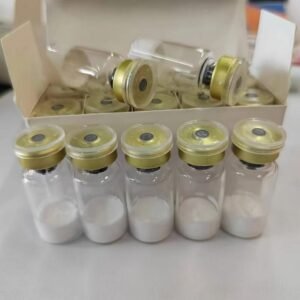
| Appearance | White to off‑white lyophilised powder |
| Storage (Lyophilised) | –20°C, sealed, protected from light; stable for up to 2 years |
| Storage (Reconstituted) | 2‑8°C for short‑term use; single‑use aliquots at –20°C for long‑term storage |
Note: Dihexa is supplied as a lyophilised powder for research use only (RUO). It is not FDA‑approved for human use and is supplied strictly for in‑vitro and in‑vivo scientific research. The compound is insoluble in water; DMSO or ethanol is recommended for reconstitution.
Reconstitution & Handling Protocol for Dihexa
Proper reconstitution of Dihexa research peptide is critical for maintaining its structural integrity and biological activity. Dihexa is insoluble in water and requires organic solvents for dissolution.
Step 1 – Preparation
-
Bring the sealed Dihexa vial to room temperature.
-
Clean your work surface with 70% ethanol and lay out sterile syringes, alcohol wipes and a clean work mat.
Step 2 – Reconstitution
-
Draw your desired volume of DMSO or Ethanol into a sterile syringe. A common starting concentration for research applications is 10‑20 mg/mL in DMSO.
-
Slowly add the solvent to the vial.
-
Gently swirl the vial until the solution is clear and fully dissolved. Do not shake vigorously, as shaking can cause degradation.
Step 3 – Aliquoting & Storage
-
Immediately after dissolution, aliquot the reconstituted Dihexa into single‑use sterile vials.
-
Store aliquots at –20°C. Avoid repeated freeze‑thaw cycles.
-
Once thawed, store at 2‑8°C and use within a short period.
-
For biological assays, further dilute the stock solution in aqueous buffers. Note that precipitation may occur upon dilution in aqueous media.
Concentration Reference Table
| Vial Mass | Solvent Volume | Final Concentration |
|---|---|---|
| 10 mg | 1.0 mL DMSO | 10 mg/mL |
| 25 mg | 2.5 mL DMSO | 10 mg/mL |
| 10 mg | 0.5 mL DMSO | 20 mg/mL |
Adjust solvent volume based on your experimental requirements. For cell culture applications, typical working concentrations may range from 0.1‑10 µM.
Storage & Stability Guidelines
| Storage Condition | Shelf Life | Notes |
|---|---|---|
| Lyophilised at –20°C, unopened | 2 years | Use desiccant, protect from light |
| Lyophilised at 2‑8°C, unopened | 6‑12 months | –20°C storage is strongly preferred for long‑term stability |
| Reconstituted in DMSO at –20°C | Up to 3 months | Single freeze only; discard after thawing |
| Reconstituted in aqueous buffer at 2‑8°C | Short‑term use | Use within hours; precipitation may occur |
Why Choose Chinese Grey Peptides for Dihexa?
As an authentic licensed peptide supplier based in the USA, we supply Dihexa research peptide and a wide range of research‑grade compounds under rigorous quality assurance protocols, fully aligned with Google’s E‑E‑A‑T standards (Experience, Expertise, Authoritativeness, Trustworthiness).
-
Verified Purity: Independent HPLC analysis with purity guaranteed ≥98% for every batch.
-
GMP‑Compliant Manufacturing: All compounds are synthesised under strict quality control conditions.
-
Full Traceability: Batch‑specific Certificates of Analysis (COA) are available for every order.
-
Wholesale Supply: We serve research institutions, laboratories, and wholesale buyers across the UK, EU, and USA with flexible volume pricing and reliable logistics.
-
USA‑Based Regulatory Compliance: All products are supplied strictly as research‑grade reagents for laboratory use only (RUO).
Researchers across the United States—including those at leading institutions—trust us for fast domestic delivery, transparent documentation and professional technical support.
FAQ: Dihexa Research Peptide
What is Dihexa research peptide?
Dihexa (PNB‑0408, N‑hexanoic‑Tyr‑Ile‑(6)‑aminohexanoic amide) is a synthetic, orally active, blood‑brain barrier‑permeable analogue of angiotensin IV. It acts as a high‑affinity binder to hepatocyte growth factor (HGF) (Kd = 65 pM) and potentiates its activity at the c‑Met receptor.
What is the molecular formula and weight of Dihexa?
The molecular formula is C₂₇H₄₄N₄O₅, and the molecular weight is approximately 504.66‑504.67 g/mol. The CAS number is 1401708‑83‑5.
What is the mechanism of action of Dihexa?
Dihexa binds to HGF with high affinity (Kd = 65 pM) and potentiates its activity at the c‑Met receptor. This triggers signalling cascades that promote synaptogenesis, neurogenesis, and neuronal repair. It also activates the PI3K/AKT signalling pathway.
How potent is Dihexa compared to BDNF?
In neurotrophic activity assays, Dihexa was found to be seven orders of magnitude more potent than brain‑derived neurotrophic factor (BDNF).
What are the primary research applications for Dihexa?
Dihexa is used in Alzheimer’s disease research (cognitive impairment rescue, synaptogenic activity, antidementia activity), Parkinson’s disease research (neuroprotection, motor function), Huntington’s disease research, traumatic brain injury and peripheral nerve damage research, and cognitive enhancement and synaptic plasticity studies.
What is the solubility of Dihexa?
Dihexa is soluble in DMSO (≥52.4 mg/mL) and Ethanol (≥4.21 mg/mL) but is insoluble in water.
What purity does your Dihexa research peptide meet?
Our Dihexa is tested to ≥98% purity by HPLC. A Certificate of Analysis (COA) is supplied with every order.
How should I reconstitute Dihexa?
Reconstitute with DMSO or Ethanol. A typical concentration is 10‑20 mg/mL in DMSO. Gently swirl to dissolve. Do not shake.
How should I store reconstituted Dihexa?
Reconstituted Dihexa in DMSO should be stored at 2‑8°C for short‑term use. For longer storage, aliquot immediately into single‑use vials and store at –20°C for up to 3 months. Avoid repeated freeze‑thaw cycles.
Is Dihexa research peptide legal to purchase in the USA?
Yes. Dihexa is a laboratory reagent sold for research use only (RUO). It is fully legal to purchase, possess, and use in the United States for legitimate in‑vitro or in‑vivo scientific research, provided it is not marketed with therapeutic claims. Note: The foundational papers describing Dihexa’s mechanism were retracted in 2025, and clinical translation to humans has not occurred. This product is supplied for research purposes only.
Does Chinese Grey Peptides ship internationally?
Yes. We ship across the UK, Europe (France, Germany, Spain, Sweden, Italy), and the USA from our US warehouse. Wholesale pricing is available for bulk orders.
Ships to USA, Canada, UK & Europe
Chinese Grey Peptides supports shipping to the USA, Canada, the United Kingdom, France, Germany, Spain, Sweden, Italy, and Europe where permitted.
Shipping support may include:
- Order processing updates
- Packaging support
- Tracking information where available
- Wholesale shipment planning
- Destination-based shipping review
- Customer support during transit
Shipping times may vary by order size, carrier, destination, customs process, and local requirements.
Why Choose Chinese Grey Peptides?
Chinese Grey Peptides focuses on quality, support, and clear communication. We help buyers review product details before placing an order.
Customers choose us for:
- Professional peptide supplier support
- Small and wholesale order options
- Product documentation support
- HPLC testing information where available
- Mass Spectrum documentation where available
- International shipping support
- Responsive communication
- Clear order assistance before payment
We aim to make the buying process simple, transparent, and professional.
- Shop Page
- Bulk Orders Page
- Contact Page
- Shipping & Return Page
- Peptide Purity Page
- PubMed Dihexa research review — useful for research-context background on Dihexa as an angiotensin IV analog.
- PubMed Dihexa analog evaluation — useful for scientific context around Dihexa’s compound identity and research history.
- FDA peptide warning letters — useful for compliance awareness around “research use only” wording and avoided claims.
- Google Product Structured Data — useful for product schema, ecommerce details, and product search visibility.
- Rank Math WooCommerce Product Schema
From its discovery as a potent HGF/c‑Met activator to its well‑characterised role in promoting synaptogenesis, neurogenesis, and cognitive enhancement, Dihexa research peptide provides a precisely defined and mechanistically advanced platform for neurobiological research. Its ability to bind HGF with picomolar affinity (Kd = 65 pM), potentiate c‑Met signalling, and activate the PI3K/AKT pathway—supported by peer‑reviewed research published in PubMed, ScienceDirect, and other authoritative journals—makes it a valuable addition to any laboratory investigating neurodegeneration, synaptic plasticity, or cognitive enhancement. By choosing high‑purity, lab‑verified Dihexa research peptide from Chinese Grey Peptides, you ensure that your research is built on a foundation of quality, reproducibility, and scientific integrity.
Ready to advance your research with Dihexa? Browse our product catalogue, request a wholesale quote, or contact our support team today to discuss your laboratory’s specific needs. Place your order now and receive GMP‑grade Dihexa delivered directly to your facility in the USA, UK, or Europe.
| Dihexa | 5mg, 10mg, 20mg, 50mg |
|---|
Be the first to review “Dihexa”
Related products
Peptides
Peptides
Reviews
There are no reviews yet.