
Uncategorized
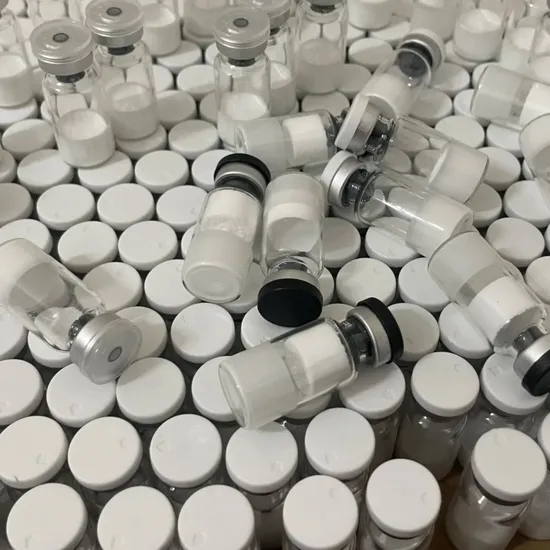
Injectable peptides for muscle growth
Oct
Injectable Peptides for Muscle Growth: Evidence and Risks
Injectable peptides for muscle growth are widely discussed in fitness, bodybuilding, and online wellness communities. Some products are promoted as ways to increase muscle mass, improve recovery, or influence growth-related hormones. However, these claims do not all have strong clinical evidence behind them.
Before considering any injectable peptide, it is important to understand what research shows, what remains uncertain, and what risks may be involved. A product’s popularity or advertised purity does not establish that it is safe or effective for building muscle.
At Chinese Grey Peptides, our goal with this guide is to help readers understand peptide terminology, evaluate testing claims, and find reliable information about quality and regulatory requirements.
What Are Injectable Peptides for Muscle Growth?
Peptides are short chains of amino acids. Some occur naturally in the body and help regulate biological processes. Others are developed or studied for specific scientific or medical purposes.
In fitness marketing, injectable peptides for muscle growth is a broad phrase used for substances claimed to affect growth-related hormones, tissue repair, recovery, or body composition.
These substances do not all work in the same way. They also differ in their research history, regulatory status, and known risks.
Three important distinctions can help readers evaluate the topic:
- Biological activity: A peptide may affect a biological pathway without producing meaningful muscle growth in humans.
- Clinical evidence: Findings from laboratory or animal studies do not necessarily predict results in people.
- Regulatory approval: A substance’s presence in scientific research does not mean it is approved for bodybuilding or self-administration.
Always assess the evidence for the specific compound and intended use. Avoid treating all peptides as one category.
Do Injectable Peptides Actually Help Build Muscle?
The answer depends on the specific substance and the outcome being measured. Some peptides are being investigated for biological effects, but evidence for many compounds promoted online for muscle growth is limited.
A change in a hormone marker, for example, does not automatically mean a person will gain more muscle or become stronger.
When reviewing a claim, ask:
- Has the compound been studied in humans?
- Were the studies designed to measure muscle mass, strength, or recovery?
- Were the studies large and well controlled?
- Were meaningful benefits demonstrated?
- Were adverse effects and long-term outcomes assessed?
- Does the evidence apply to the exact product and intended use being promoted?
Be cautious of dramatic before-and-after photographs, influencer testimonials, and claims of guaranteed results. These are not substitutes for controlled clinical evidence.
The FDA also warns that some bodybuilding products contain undeclared ingredients or substances associated with serious health risks. See its consumer guidance on potentially risky bodybuilding products.
Common Claims About Peptides and Muscle Growth
Online discussions often group different compounds together. That can make it difficult to distinguish research findings from marketing claims.
Growth-hormone-related peptides
Some compounds are studied for their effects on growth-hormone signaling. However, changing a hormone level does not establish that a substance will safely improve muscle mass, strength, or athletic performance.
The effects and risks depend on the specific compound, the available clinical evidence, and the intended use.
Peptides promoted for recovery
Some products are marketed for recovery from exercise or soft-tissue injuries. Marketing claims may exceed the available human evidence.
Evidence from laboratory research or animal models should not be presented as proof that a substance speeds recovery in people.
Products marketed for body composition
Some compounds are promoted for changing body fat or lean mass. These claims require substance-specific evidence, and results from one compound cannot be applied to another.
Key point: A peptide’s proposed mechanism is not the same as a proven health or fitness benefit.
Injectable Peptide Safety: What Are the Main Concerns?
Injecting a substance introduces risks beyond those associated with its biological effects. The risks can be especially difficult to assess when a product comes from a source with uncertain quality controls.
Potential concerns include:
- Incorrect identity or composition: The material may not match its label.
- Contamination: Unwanted substances may be present.
- Sterility problems: A product intended for injection requires appropriate microbiological quality controls.
- Immune reactions: Some peptides or impurities may trigger unwanted immune responses.
- Unpredictable biological effects: A compound may affect hormone levels or other bodily processes.
- Unknown long-term outcomes: Limited human research can leave important questions unanswered.
- Interactions: A substance may interact with medicines or an existing health condition.
The FDA has identified substance-specific concerns involving certain peptides considered for compounding, including issues related to immunogenicity, peptide-related impurities, and limited safety information. These concerns should be assessed for each compound rather than generalized to every peptide.
Review the FDA’s information about certain bulk drug substances that may present significant safety risks.
Do not assume that a product is safe to inject because it is sold online, described as research material, or accompanied by a laboratory report.
Peptide Purity Testing: HPLC, Mass Spectrometry, and COAs
Testing documentation can help explain what was measured in a sample. However, each method has limits, and no single test establishes every aspect of quality.
HPLC and reported purity
High-performance liquid chromatography (HPLC) separates components in a sample. Depending on the method, it can help estimate the relative amount of detected components.
When reviewing an HPLC report, look for:
- The sample or batch identifier.
- The method used.
- The chromatogram and peak information.
- The stated purity calculation.
- The laboratory’s identity and report date.
A reported purity percentage does not, by itself, prove that a product is sterile, suitable for injection, clinically effective, or safe for human use.
Mass spectrometry and identity
Mass spectrometry measures the mass-to-charge ratios of ions. Depending on the analytical method, it can provide evidence that helps assess whether a sample is consistent with the expected molecular mass.
It is useful to review the sample identifier, expected and observed results, method details, and the laboratory responsible for the analysis.
Mass spectrometry and HPLC can provide complementary information, but they do not replace all other quality checks.
What a certificate of analysis can tell you
A certificate of analysis (COA) reports the results of specified tests for a sample or batch.
A useful COA should make it possible to understand:
- Which material was tested.
- Which sample or batch the report covers.
- What methods were used.
- Which results were obtained.
- Which laboratory issued the report.
- When the testing took place.
A COA should be interpreted within its stated scope. It does not automatically verify the full supply chain, prove sterility, establish clinical safety, or demonstrate approval for human use.
How to Assess Peptide Supplier Transparency
When researching peptide-related companies, focus on verifiable information rather than promotional claims.
Check business information
Look for a consistent business name, clear contact details, relevant company information, and an explanation of the company’s role in the supply chain.
If a supplier claims to hold a licence or certification, verify the claim with the relevant issuing authority where possible.
Review testing information
Ask what the available tests measure and whether the records can be linked to the relevant sample or batch.
Determine whether the testing was performed internally or by an independent laboratory. The source of a report is only one factor; the method, results, and traceability also matter.
Look for accurate product descriptions
Descriptions should identify the material clearly and avoid unsupported guarantees about purity, safety, performance, or medical suitability.
Be cautious of claims that a product is approved for human use without evidence from the relevant regulatory authority.
Understand the limits of disclaimers
Words such as “research use only” do not automatically determine whether a product’s marketing, sale, import, or intended use complies with applicable laws.
A responsible assessment considers the substance, its intended use, the claims made about it, and the requirements in the relevant jurisdiction.
Legal and Regulatory Considerations in the USA
The regulatory status of an injectable peptide depends on the specific substance, its intended use, how it is marketed, and applicable laws.
A substance being studied in a laboratory does not mean it is approved as a medicine. Likewise, a product’s online availability does not establish that it is legally marketed for bodybuilding.
The FDA maintains information about drug compounding and substances that may present safety concerns. Readers should consult official sources to understand the status of the specific substance rather than relying on general statements from sellers or social media.
For products intended for other countries, requirements may differ. The United Kingdom, Canada, and individual European countries may have their own rules governing medicinal products, imports, and distribution.
Check the relevant official authorities before making decisions involving a particular product or destination.
Evidence-Based Ways to Support Muscle Growth
People who want to build muscle have options with a stronger evidence base than relying on unverified injectable products.
Follow a consistent resistance-training plan
Regular resistance exercise helps develop strength and muscle. Train major muscle groups consistently and increase the challenge gradually as your ability improves.
The US Centers for Disease Control and Prevention recommends muscle-strengthening activity on at least two days each week for adults.
Read the CDC’s guidance on muscle-strengthening activity.
Eat enough protein and energy
Protein provides the amino acids needed for muscle protein synthesis. Adequate overall food intake also supports training and recovery.
The NIH Office of Dietary Supplements provides an evidence-based overview of dietary supplements for exercise and athletic performance.
Prioritize recovery
Sleep, rest between demanding sessions, and a sustainable training schedule all support progress.
Seek qualified advice when needed
A qualified healthcare professional or registered dietitian can help assess individual needs, medical considerations, and appropriate options. People with medical concerns should seek individualized advice rather than experimenting with unapproved injectable substances.
Frequently Asked Questions About Injectable Peptides for Muscle Growth
Do injectable peptides guarantee muscle growth?
No. No injectable peptide should be assumed to produce a guaranteed result. Evidence varies by substance, and many products promoted for muscle growth lack strong clinical evidence for that purpose.
Are injectable peptides approved for bodybuilding?
There is no blanket approval for all peptides. Approval depends on the specific product, substance, and medical indication. Do not assume that a peptide is approved for bodybuilding because it is discussed online.
Does a high purity percentage mean an injectable peptide is safe?
No. A purity result addresses only what the particular analytical method measures. It does not automatically prove sterility, correct identity in every respect, clinical safety, or suitability for injection.
Can a COA prove that a peptide is safe for human use?
No. A COA reports specified analytical results. It cannot, by itself, establish that a substance is clinically safe or approved for human use.
Are peptides the same as anabolic steroids?
No. Peptides and anabolic steroids are different categories of substances. Their structures, biological effects, and regulatory considerations differ. Products marketed for muscle growth should be assessed individually rather than grouped together.
What should I check when reviewing a peptide supplier?
Review business information, product identification, analytical methods, batch traceability, COAs, and relevant regulatory statements. Verify important claims independently wherever possible.
What are evidence-based ways to build muscle?
Consistent resistance training, adequate nutrition and protein, sufficient recovery, and a sustainable routine are well-established foundations. Individual needs can vary.
Where can I find reliable information about peptide safety?
Start with official sources such as the US FDA, the NIH Office of Dietary Supplements, and relevant health authorities in your country. Ask a qualified healthcare professional about personal medical concerns.
Conclusion: Injectable Peptides for Muscle Growth Require Careful Evaluation
Injectable peptides for muscle growth are widely discussed online, but marketing claims should not be confused with proven results. The evidence varies by substance, and important questions about safety, product quality, and regulatory status may remain unanswered.
HPLC results, mass spectrometry reports, and COAs can provide useful information, but none independently proves that an injectable product is safe or effective for bodybuilding.
Chinese Grey Peptides encourages readers to approach peptide information critically, verify claims through reliable sources, and understand the requirements that apply to each material and intended use.
Take the next step with informed research: visit Chinese Grey Peptides to review the available company information and documentation. Prioritize reliable evidence, transparent records, and qualified health guidance when evaluating claims about muscle growth.
Injectable peptides for muscle growth, Injectable peptides for muscle growth, Injectable peptides for muscle growth, Injectable peptides for muscle growth, Injectable peptides for muscle growth, Injectable peptides for muscle growth, Injectable peptides for muscle growth, Injectable peptides for muscle growth, Injectable peptides for muscle growth, Injectable peptides for muscle growth, Injectable peptides for muscle growth, Injectable peptides for muscle growth, Injectable peptides for muscle growth, Injectable peptides for muscle growth
